
Two restaurants, one street
In one hangs a poster you can tell is AI from ten metres away. In the other stands a black board with the day's menu in chalk, and maybe you even saw the owner writing it on your way to work this morning. Where will you go for lunch this afternoon?
You don't have to think long. And that's the point: the decision is made before you can justify it.
Value is what you recognise as effort
Value is subjective, and every judgement carries how much effort and passion someone senses in the thing. Most people treat a gift more carelessly than something they researched for weeks and saved up for. Same object.
The same goes for your clients' customers. They can't see whether a design system or a prompt sits behind a website. But they sense whether someone cared. People are only impressed by a result when they recognise the effort behind it, or when the result stands out clearly from the standard. The new standard is the AI average.
AI works with the mean of what already exists. Every new prompt lands on an orbit around the same star, flat on the ground. The design process builds upward from there.
A unique position never comes from one more pass. It comes from decisions someone makes, connects and stands behind.
Twenty pages of concept from a chat window
The enquiry arrives by email with a PDF attached. Twenty pages, made with Claude or ChatGPT: target personas with names and ages, a colour palette, three claims, a sitemap, moodboard descriptions, and phrases like "modern, clean, user-centred". At the top: "We already have the concept, you just need to build it."
We now get enquiries like this every week. The intention is good: the client wants to save us work and save himself time. The effect is the opposite, for three reasons.
- The concept is a monologue. The AI contradicted nobody and asked nothing. It wrote down what the client already thought, only in nicer words. Where the client misjudges himself, the concept misjudges him the same way.
- It describes the industry, not the business. The personas could apply to any competitor. So could the palette. What sets the business apart is nowhere in it, because the AI can't know it. It lives in the owner's head, and often he doesn't know it matters.
- It sets expectations before anyone has talked. Twenty pages feel like work already done. Every question from us then feels like a step backwards. We have to take the concept apart before we can begin.
Your real value is only spotted by a human in conversation, because it turns up where you least expect it. A brief says "modern, clear product presentation". That enquiries should land in the backend with the right subject line, because that saves time every day, is in no PDF. It comes after twenty minutes of listening, usually in passing.
The clients who are already three steps ahead
The difference runs the other way too. They arrive with the sentence: we deliberately don't want a site that looks like everyone else's in our industry. They searched specifically for a design studio that tailors design assets to their brand. They want visitors to pause for a moment.
An optician put it this way in our first conversation:
"We looked at all the agencies ChatGPT suggested. But you, as a studio, stood out in your field with your website. That's exactly what we want as opticians."
The point: the AI delivered the list. The decision was made by looking.
These clients have understood the chalkboard. They don't want their industry's list of services, they want their own handwriting. The only way above the average is to work out the personality of the business.
What still holds five years on
The value of design shows not at handover but in the years after. After a year or two the requirements change: new offer, new audience, new technology. If the process was too fast back then, the answer is "let's just make something new". If real thinking went in, the question becomes "how do we keep what we have and adapt it?" One is a whole new project. The other is an evolution.
Two websites, launched today. Every year brings a new need. Drag the year to the right and see what measure each site makes of it.
Reuter und Sohn: live in 2021, still on top in 2026
With the Kassel painting company Reuter und Sohn we started developing brand and website in 2020. The site went live in 2021. In between lay many meetings, drafts, counter-drafts and decisions the client made on real layouts, not on gut feeling.
Five years later the site is no longer technically state of the art. That's normal and would be true of any website. It still keeps pace with current sites. Two reasons:
- We always build with the newest technology of its time. Whoever builds on the current state instead of yesterday's proven methods has a head start that lasts for years.
- The design system is timeless. Typography, colour world and the brand's language follow no trend. That's why the presence still feels fresh today.
When the company was hiring this year, a relaunch was never on the table. We put a jobs page on the existing foundation and linked it to a Google Ads campaign. An extension, not a new project.
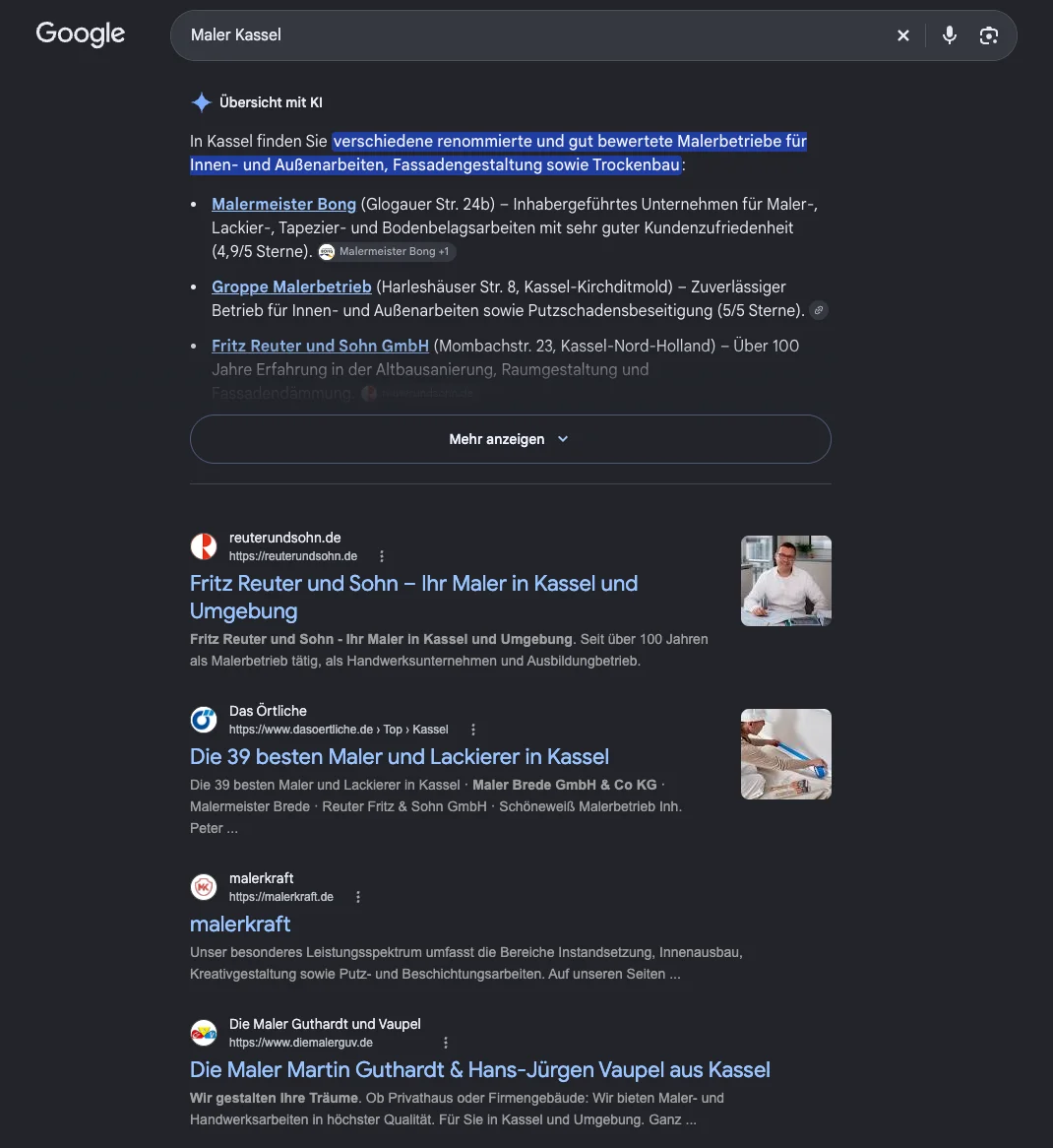
And the result of the long groundwork? Search for "Maler Kassel" today and Reuter und Sohn ranks in the top three organic results. Google's AI overview also lists the company among the recommended painters in town. A website that AI search uses as a source today, even though it was built long before the AI hype.
Reuter und Sohn: a brand that keeps growing
Logo relaunch, corporate design, scaffold banners, vehicles and recruiting for a Kassel painting company founded in 1901. Not a one-off project, but many steps on the same foundation.
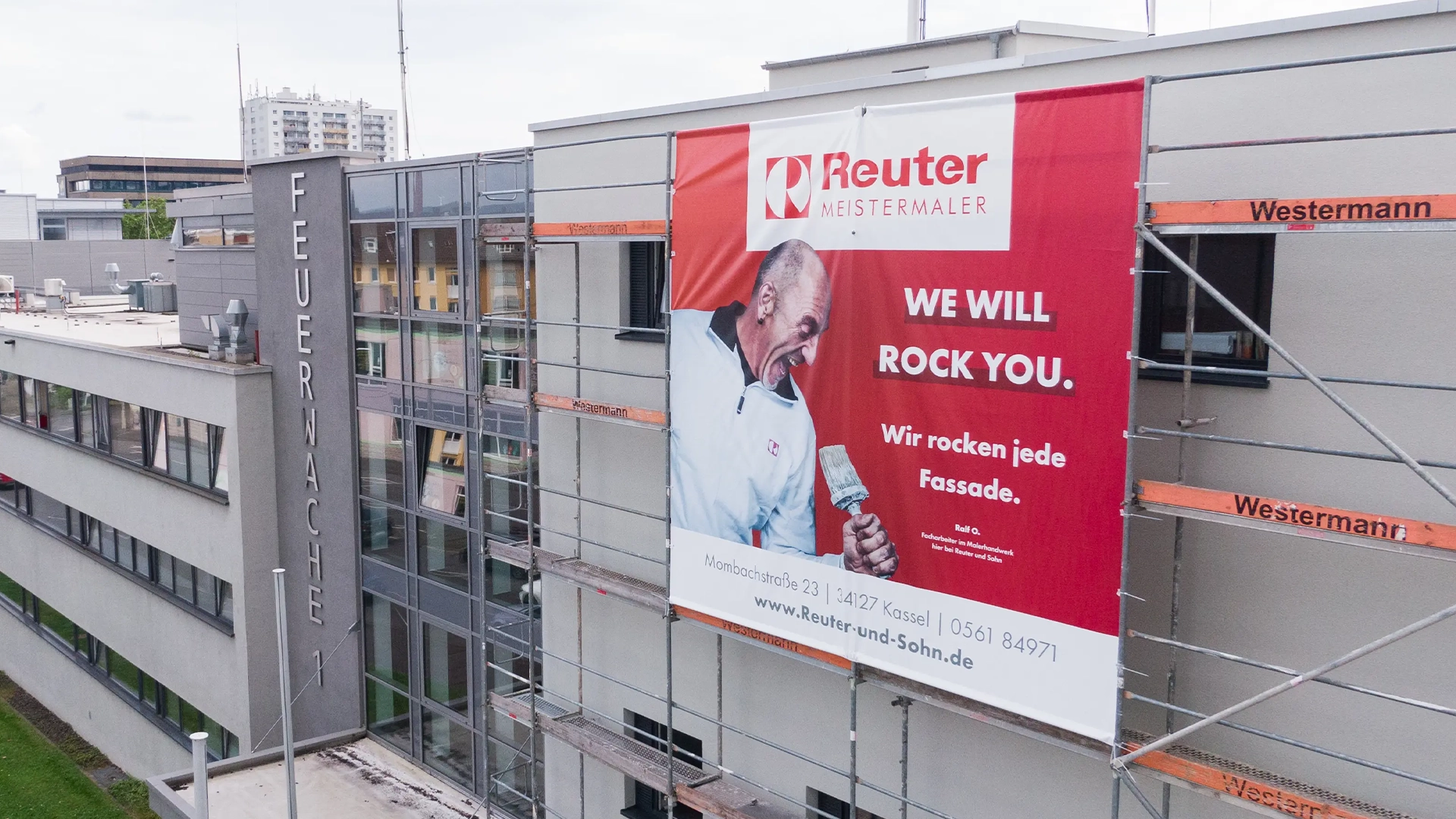
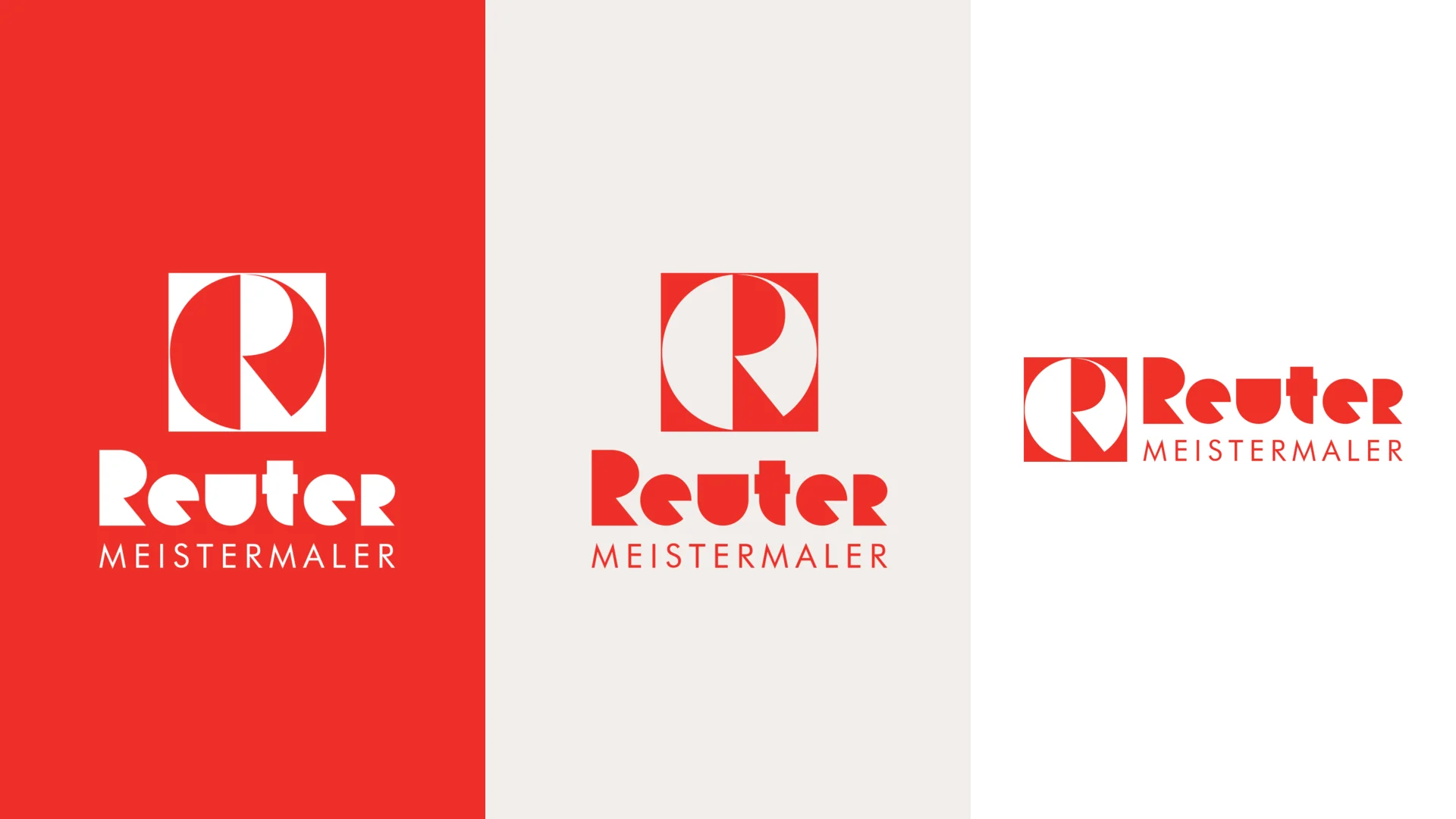
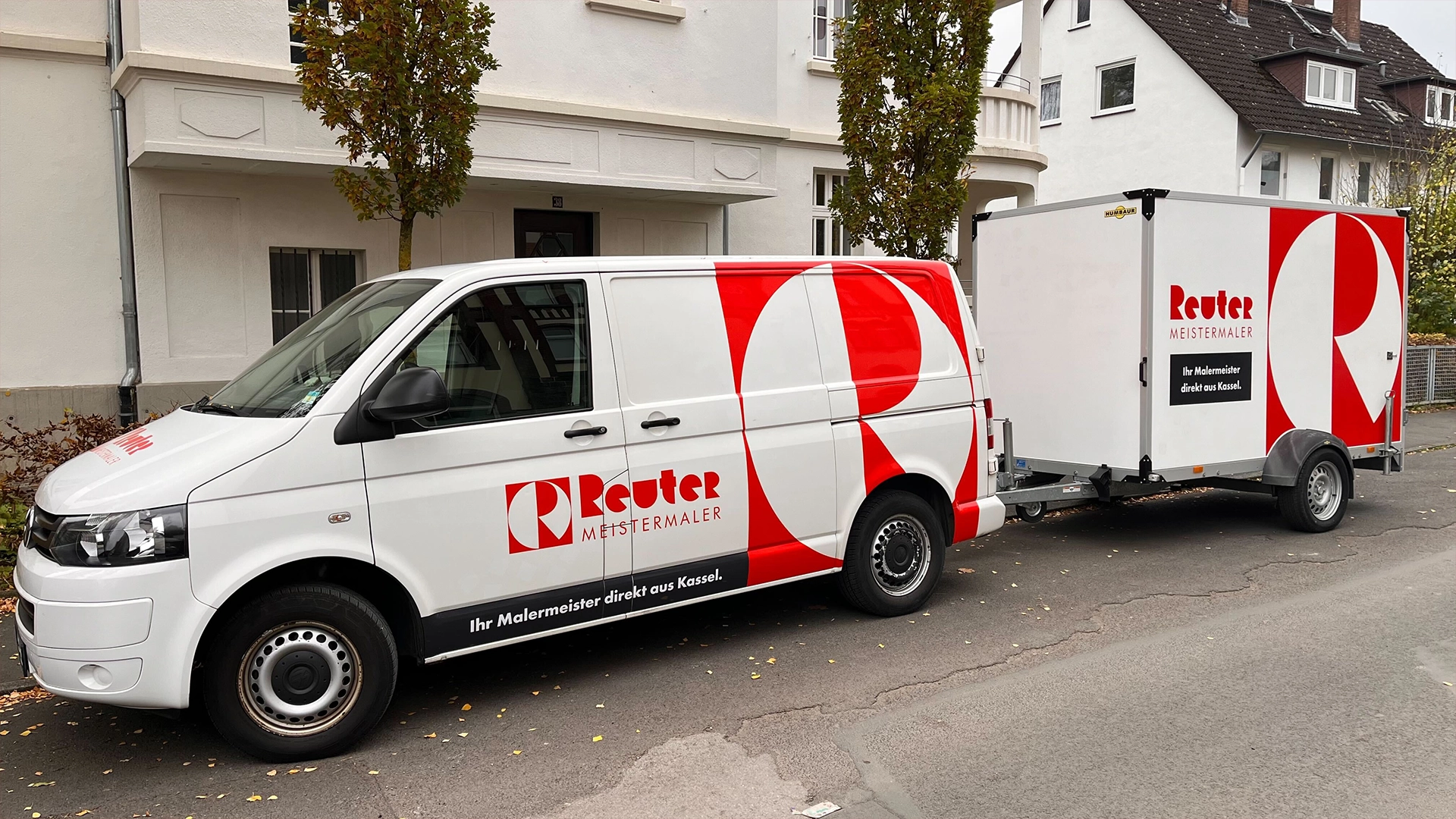
For Reuter und Sohn, brand and website carry enormous value. Not because they took long, but because the right decisions were made in that time. Fast design without thinking ends up in the bin. Considered design grows with you.
Handwriting instead of the mean
Give two good designers the same task. You get two different results, and both work. The difference lies in the person: their decisions, their experience, their eye. AI does return something different on every run, but those differences come from chance, not from a stance. In the end all the variants circle the same mean.
There's a legal side too. German copyright protects only personal intellectual creations, works with a human and their own creative decisions behind them. A logo made purely from a prompt is, by current understanding, usually not protected. How usage rights for design and web work function, we explain on our usage rights page.
TL;DR
What an AI does for you, it does just as well for your competitor.
Value is recognised by effort. Effort is recognised only by a human. That's why we talk before we open a tool.
Your chalkboard
You know what sets your business apart from the others on the street, but can't put it in one sentence? That's exactly what the first conversation is for. One hour, no tools, just questions. Afterwards you'll know whether we're a match.
How we go about it and why we still use AI every day is in part one: "That Was Quick.".